Tel/WhatsAapp:+86 18011919834
E-mail: chloe.x@fybagcustom.com

Tel/WhatsAapp:+86 18011919834
E-mail: chloe.x@fybagcustom.com
Send Your Inquiry Today

Textile Suppliers
Fabric Families
Incoming Material QC
Days for Swatch Approval
Choosing the right fabric is not just about looks—it’s about balancing performance, brand positioning, and cost efficiency. At FY Bag Factory, we guide B2B buyers through four critical factors
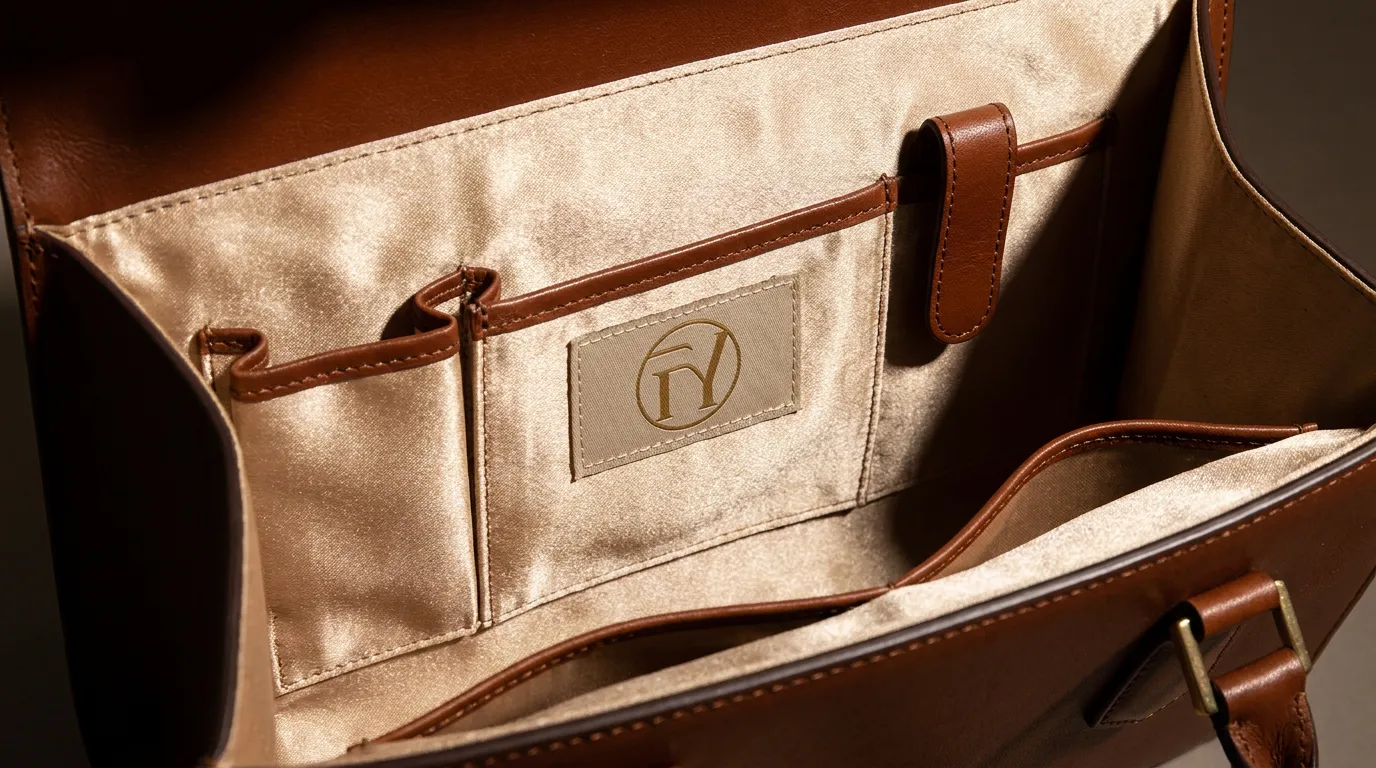
Fabrics must pass real-world tests for abrasion, tear strength, water resistance, stain protection, and colorfastness, ensuring durability for retail and daily use.
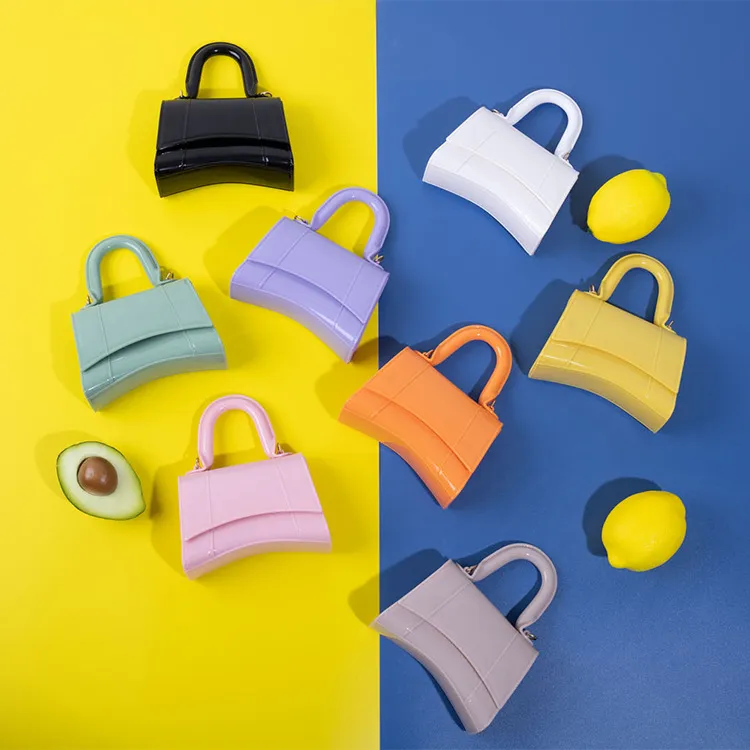
From smooth or pebbled textures to matte or glossy finishes, we evaluate drape, handfeel, and color consistency to match your brand’s identity.
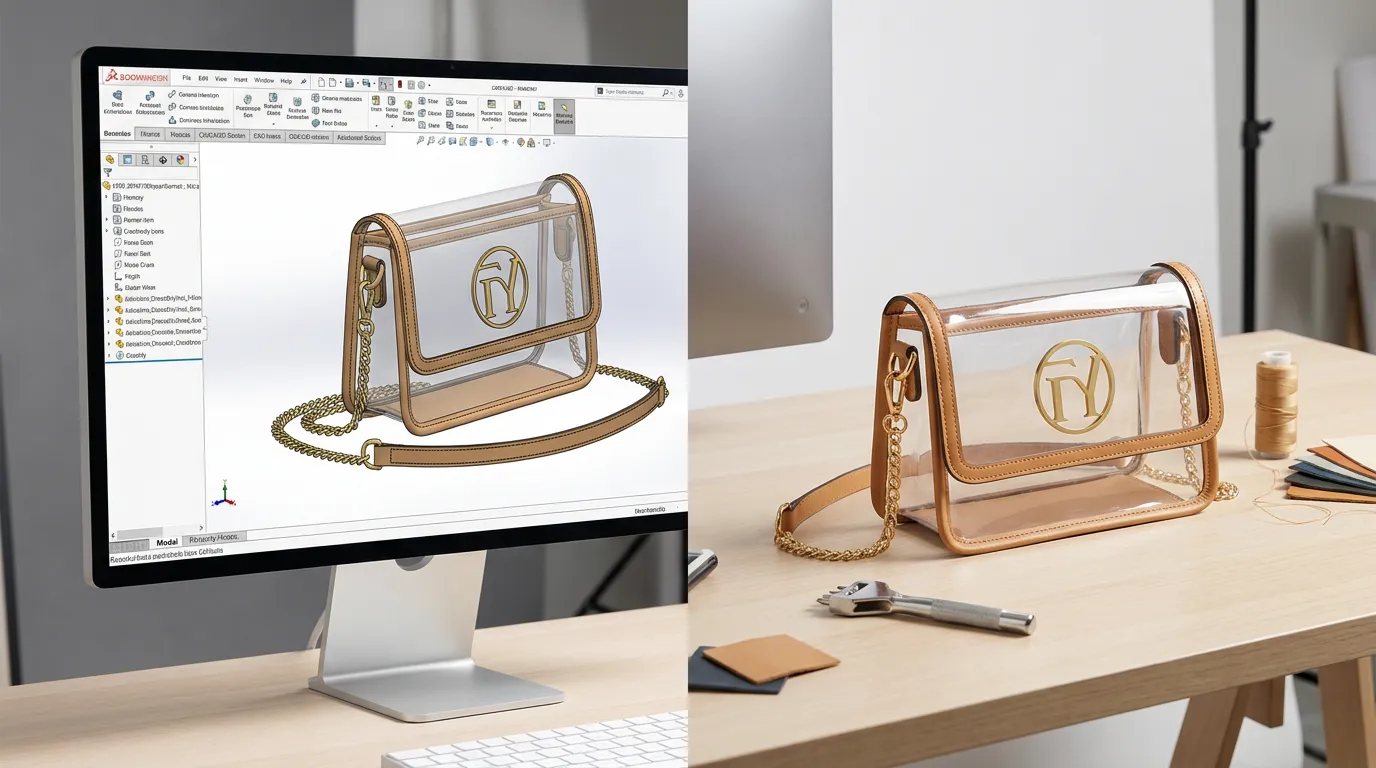
We help optimize MOQ, cost, and lead time so that both large-scale retail chains and Amazon FBA sellers can achieve healthy margins without compromising quality.
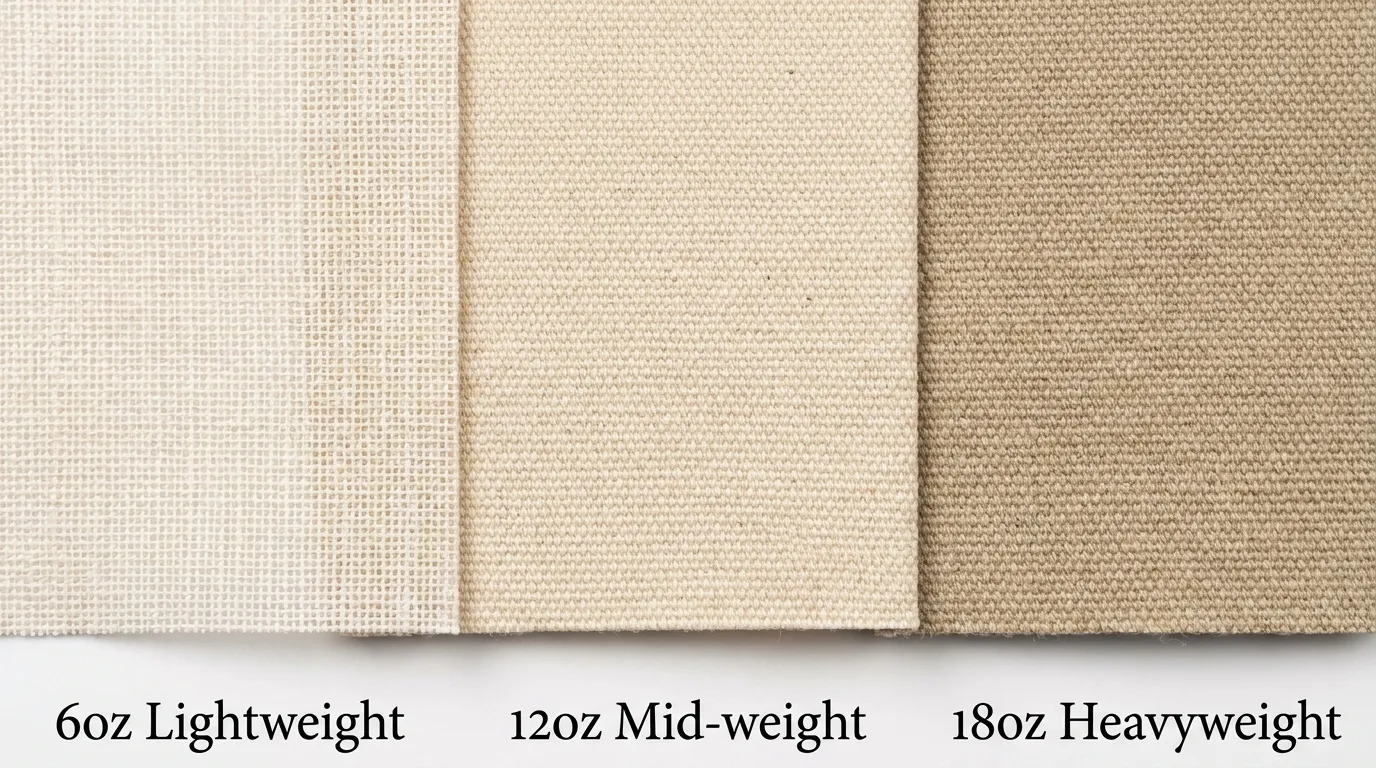
Recycled materials like RPET and regenerated nylon, combined with eco-friendly inks and finishes, allow brands to build collections aligned with today’s ESG expectations.
Fabric customization isn’t one decision — it’s six. Every dimension affects the finished bag’s performance, cost, and brand perception. Most buyers focus only on material type; the other five dimensions are where the real product differentiation happens.

Fabric thickness and density. A 210D polyester foldable bag vs a 1000D nylon Cordura duffle — same material family, completely different product. We specify to exact denier (D), ounce (oz), or GSM.

Plain weave, twill, ripstop, Oxford crosshatch, satin, jacquard — the weave affects texture, drape, tear resistance, and printability. We match the weave to your bag type’s structural needs.

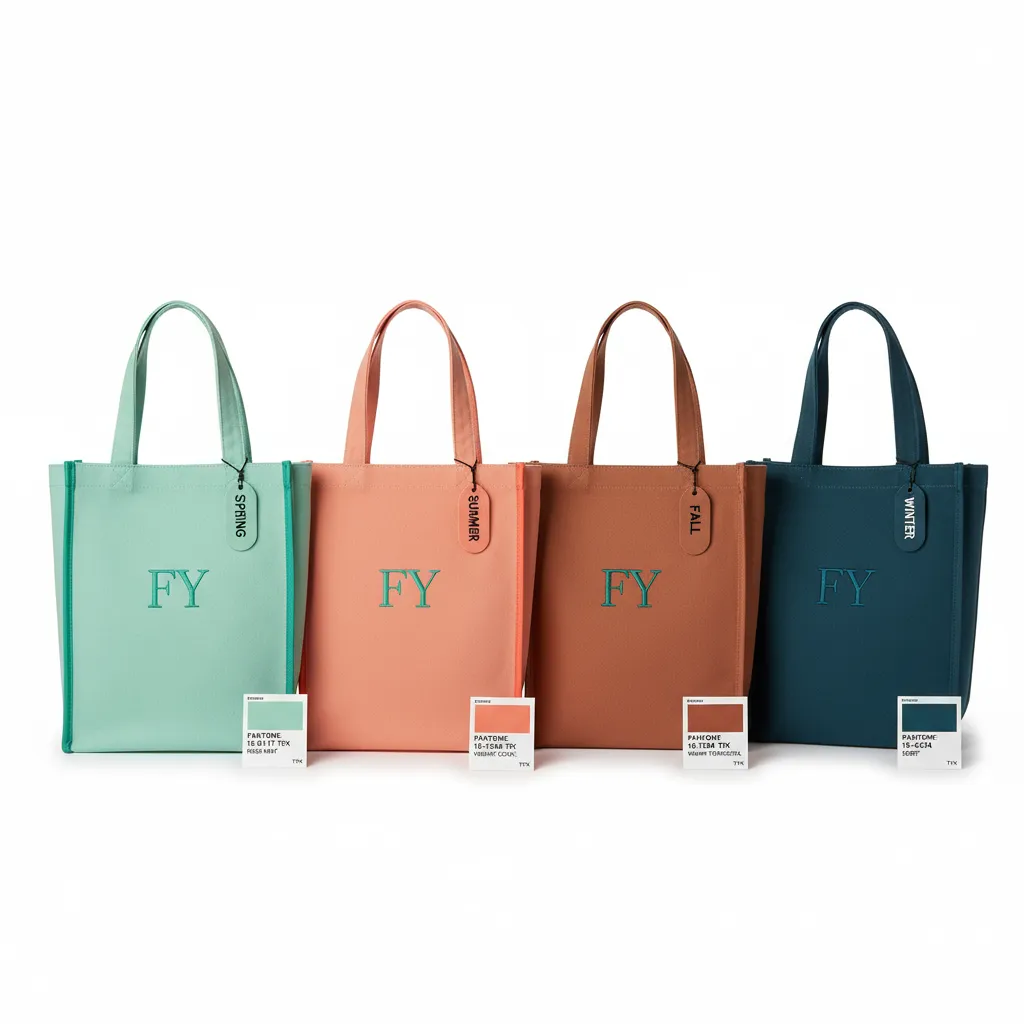
Pantone matching, yarn-dyed vs piece-dyed, reactive vs disperse dyes, color fastness standards. We source in your exact Pantone reference and verify batch-to-batch consistency across production runs.

DWR water repellent, PU coating, wax coating, anti-pilling, UV protection, anti-microbial, flame retardant. Finishes add performance without changing the base material.

Virgin, recycled (rPET, recycled non-woven), organic (GOTS cotton), natural (unbleached, undyed), or certified (GRS). We match your eco claims to verifiable material sourcing.


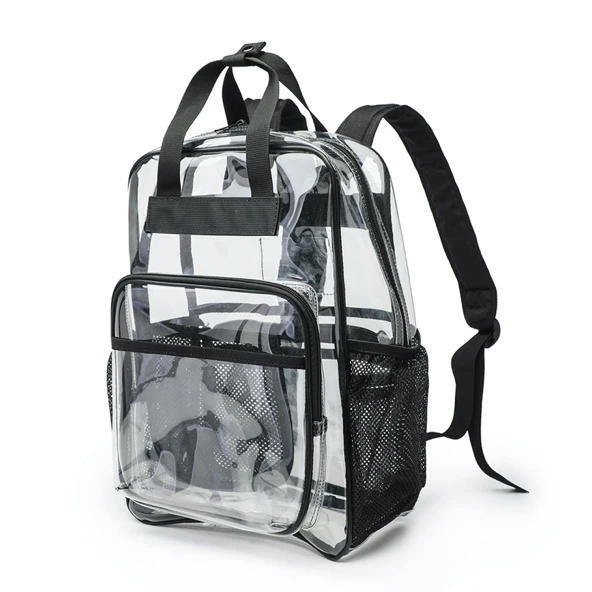
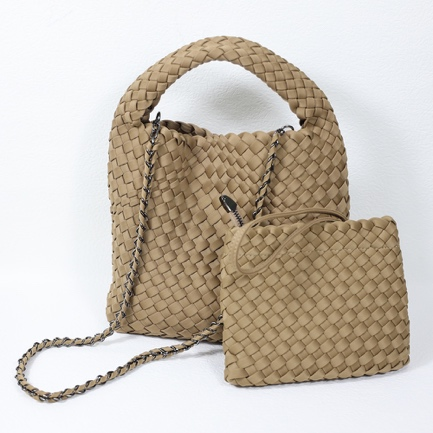
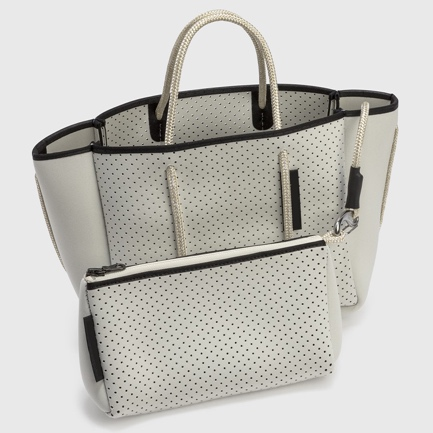

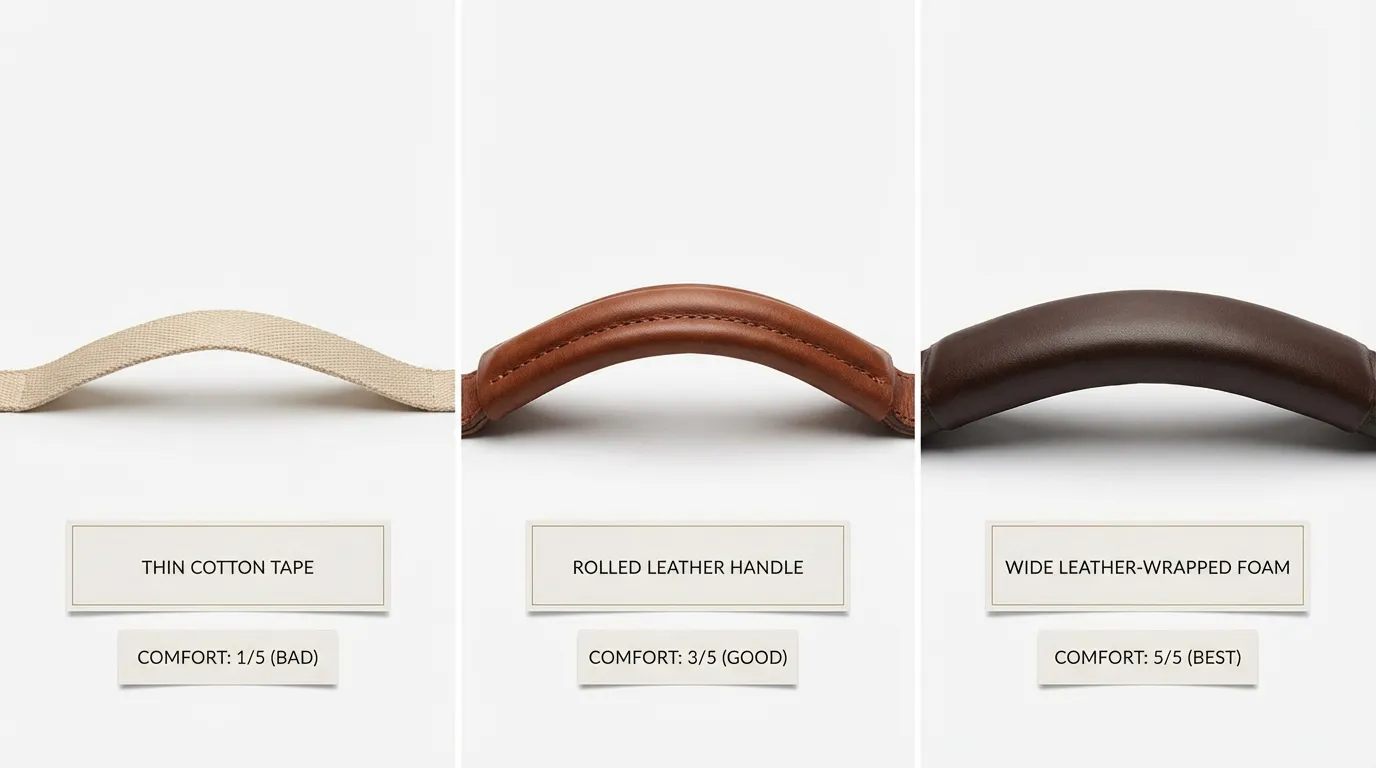
Choose nylon when: you need the highest tear resistance, a silky hand-feel, and natural water repellency. Nylon is stronger per denier than polyester — a 420D nylon outperforms a 600D polyester in abrasion resistance. It’s the default for technical backpacks and travel bags.
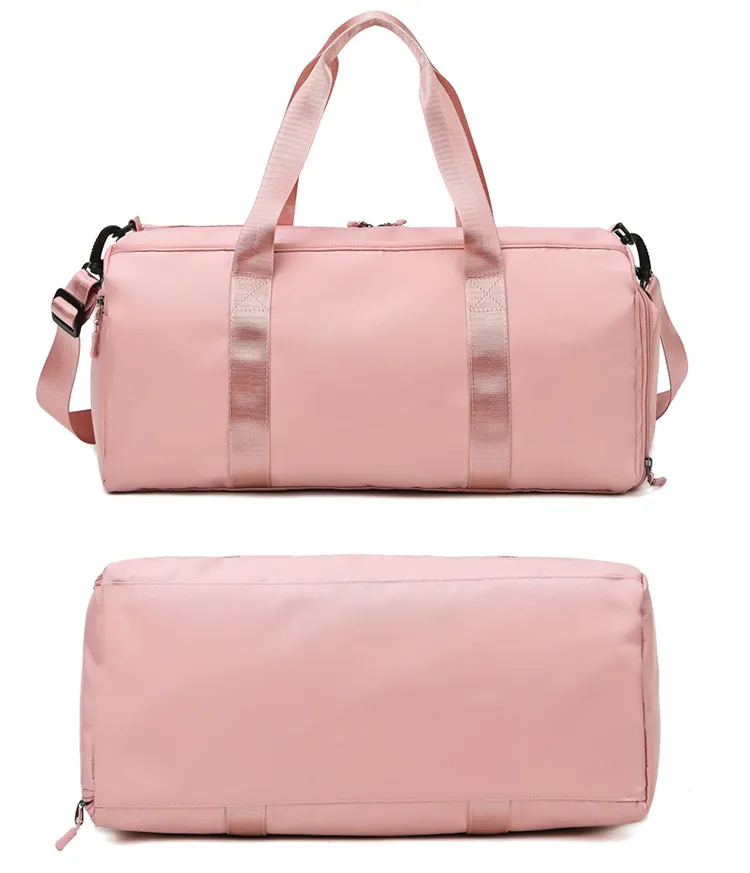
Choose polyester when: cost matters, you need vivid color saturation (polyester holds dye better), or you want a recycled (rPET) option for eco positioning. Polyester is 15–25% cheaper than nylon at equivalent deniers and offers better UV resistance. It’s the default for gym duffles, foldable bags, and promotional items.
Choose canvas when: you need structure and durability. Canvas (10–16 oz) holds its shape, stands upright, and lasts for years. It’s the premium tote bag material — thick enough for embroidery, heavy enough for daily carry loads. Best for lifestyle brands and repeat-use retail bags.
Choose cotton when: softness and washability matter more than rigidity. Cotton (5–8 oz) is lighter, more flexible, and easier to fold — ideal for drawstring bags, favor pouches, and bags that need to compress flat. Lower cost than canvas. Organic cotton (GOTS) available for eco brands.

Choose non-woven when: cost is the #1 priority. Non-woven PP bags start under $0.50/pc — the cheapest reusable bag material. They’re the default for supermarket checkout, mass conference giveaways, and any order above 5,000 pcs where per-unit cost drives the decision. Available laminated for a premium look.
Choose polyester when: you need a bag that folds into a compact pouch, handles repeated washing, or lasts 2–5 years instead of 6–12 months. Polyester costs 2–3× more per unit than non-woven but delivers 5–10× the reuse lifespan — a better cost-per-impression over the bag’s lifetime.
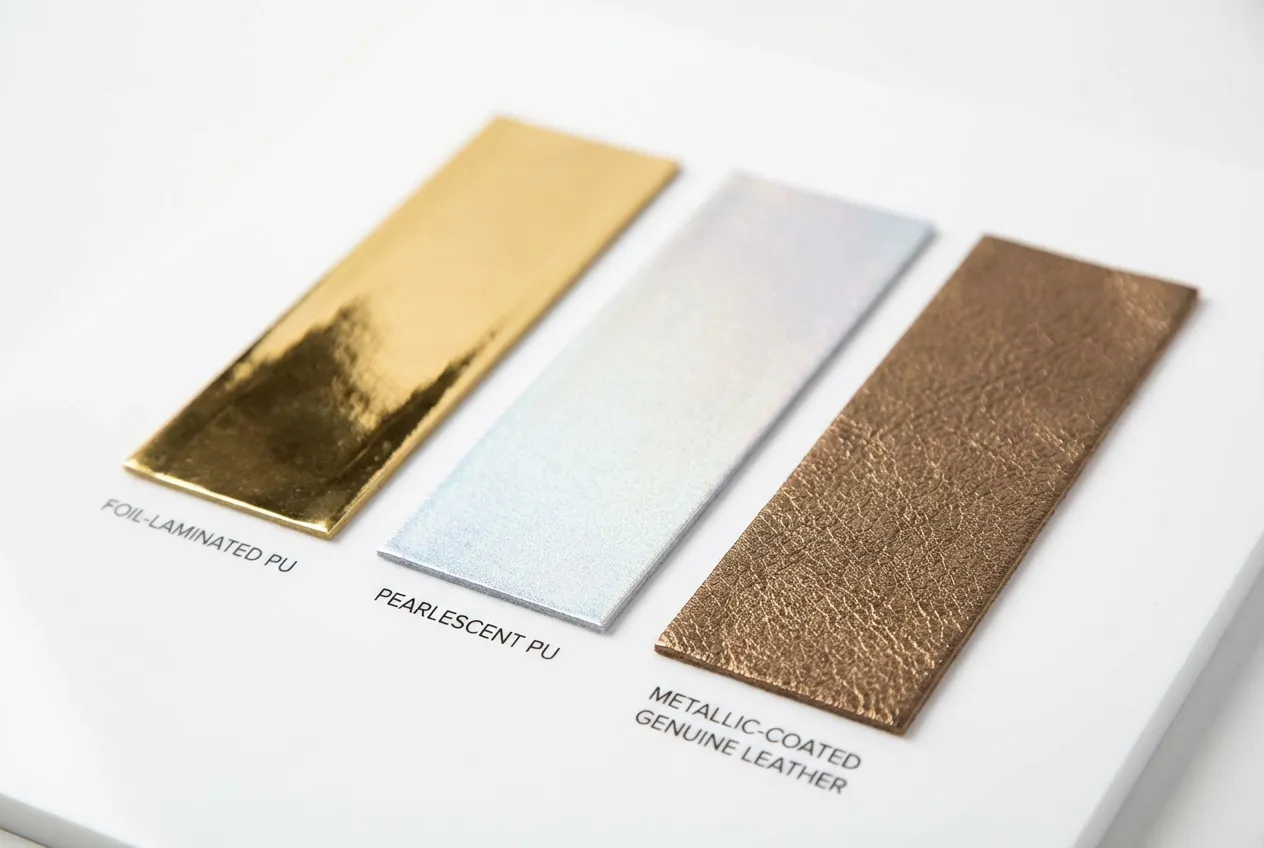
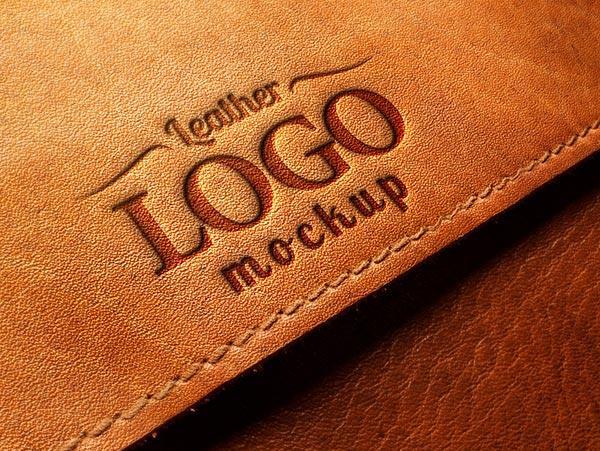
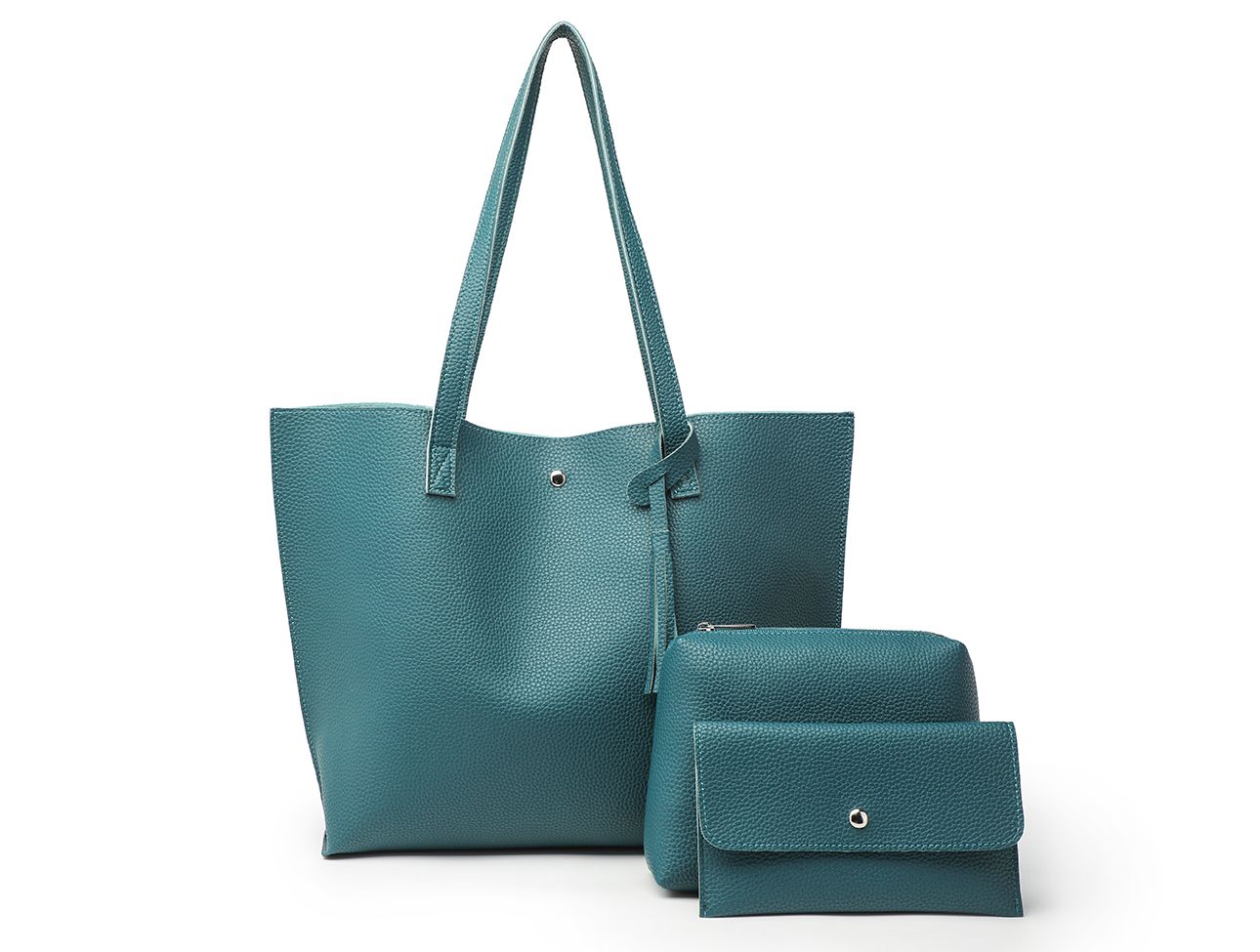
Choose PU leather when: the bag needs to project polish and luxury — handbags, office totes, evening clutches, executive gifts. PU leather debosses beautifully, accepts foil stamping, and reads “premium” across all cultures and markets. Available in 200+ colors and finishes.
Choose waxed canvas when: you want a premium, heritage, lifestyle look that says “rugged quality” rather than “corporate polish.” Waxed canvas develops a patina over time — it gets more attractive with use. It’s the material that repositions a basic duffle or weekender from $25 to $45+ retail without redesigning the bag.
A bag isn’t just one fabric — it’s a layered system. The exterior shell gets most of the attention, but the lining, interfacing, padding, and reinforcement materials determine how the bag performs, feels in hand, and holds its shape over months of use. We customize ALL layers, not just the outside.
A bag’s fabric is just the starting point — the right finish or treatment can elevate performance, appearance, and brand value. In FY Bag Factory, We can assist you in handling various additional fabric requirements, saving you time and money.

Not every printing method works on every fabric. Choosing the wrong combination results in poor adhesion, color inaccuracy, or cracking. This matrix shows what works, what’s possible with care, and what to avoid.
✓ = Recommended · △ = Possible with care · — = Not recommended or not applicable
Share your target scenarios & budget → We’ll propose 2–4 fabric routes within 24h
Don’t know which fabric to choose? Start with your application. Each use case has a primary recommended fabric, a premium alternative, and an eco option — all affecting the final bag’s price point and market positioning.
Application
Primary Fabric
Weight / Spec
Premium Alternative
Eco Option
Key Finish
Needed — rain, splashes, outdoor
Nylon with DWR, coated polyester, PU leather, Tyvek, neoprene, laminated non-woven. Eliminate: uncoated cotton, jute, raw canvas.
Required — ESG, eco branding, regulation
rPET polyester, organic cotton (GOTS), jute, unbleached canvas, recycled non-woven PP. See eco-friendly page for the full material sustainability ladder.
Not required — performance and cost priority
Standard (virgin) versions of all fabrics available at lower cost. No documentation or certification overhead.
Cosmetic pouches → PU leather, nylon, or canvas
Crossbody / bum bags → Nylon or PU leather
Drawstring / promo → 210D polyester or cotton
Still narrowing down? Send us your bag type and price tier — we’ll recommend 2–3 fabric options with swatches.
Our fabric process runs BEFORE bag sampling begins — because the fabric must be right before we cut a single prototype. This sequence ensures zero material surprises at production stage.

Day 1–2
You tell us the bag type, target market, price tier, and any specific material requirements (weight, finish, eco, color). We recommend 2–3 fabric options with cost comparisons.
Day 3–5
We pull fabric swatches from our supplier network (200+ verified mills). Physical swatches shipped or photographed for your review. Pantone color match verified under D65 lighting.
Day 5–7
You approve the fabric swatch — material type, weight, color, hand-feel, and finish. Any adjustments (heavier weight, different finish, alternate color) loop back to Step 2.
Day 7–10
Approved fabric is ordered from the supplier. Standard fabrics: 3–5 days. Custom-dyed Pantone or specialty fabrics: 7–14 days. Delivered to our factory for incoming QC.
Day 10–12
Every fabric roll is inspected upon arrival: weight/GSM verified, color checked against approved swatch (under D65), surface defects scanned, hand-feel confirmed. Rejected rolls returned to supplier.
Day 12+
Approved fabric moves into the bag prototyping process. The design and sampling stages use the same verified fabric that will be used in mass production — no substitutions.
100% of incoming fabric rolls are inspected before they enter our cutting room. This is the most critical quality gate in our process — defective fabric caught here saves weeks of rework later. Every roll is checked against the approved swatch and spec sheet.
Fabric weight measured per square meter (GSM) or per linear yard. Compared against the approved spec. Acceptable tolerance: ±5%. A 600D polyester that arrives at 530D gets rejected — weight affects durability, hand-feel, and structure.
Fabric color compared against the approved Pantone lab dip or swatch under D65 standard daylight illumination. ΔE ≤ 1.5 for Pantone-matched orders. Batch-to-batch consistency checked on multi-roll orders to prevent shade variation across the finished bag run.
Every roll inspected on a fabric inspection machine (4-point system). Weave irregularities, knots, stains, holes, foreign fibers, and coating inconsistencies flagged. Defective sections marked and excluded from cutting; rolls exceeding defect thresholds rejected entirely.
Physical hand-feel compared against the approved swatch. The same fabric at the same weight can feel different depending on finishing conditions (softer, stiffer, smoother, rougher). If the hand-feel doesn’t match, the roll is flagged for review.
Fabric width measured at multiple points along the roll — width inconsistency causes pattern-cutting errors and material waste. Roll length verified against supplier declaration to prevent short-shipment.
DWR, PU coating, wax, lamination, or other finishes tested: water-drop test for DWR effectiveness, peel test for coating adhesion, visual inspection for coating uniformity. Unfinished patches or peeling coating rejects the roll.
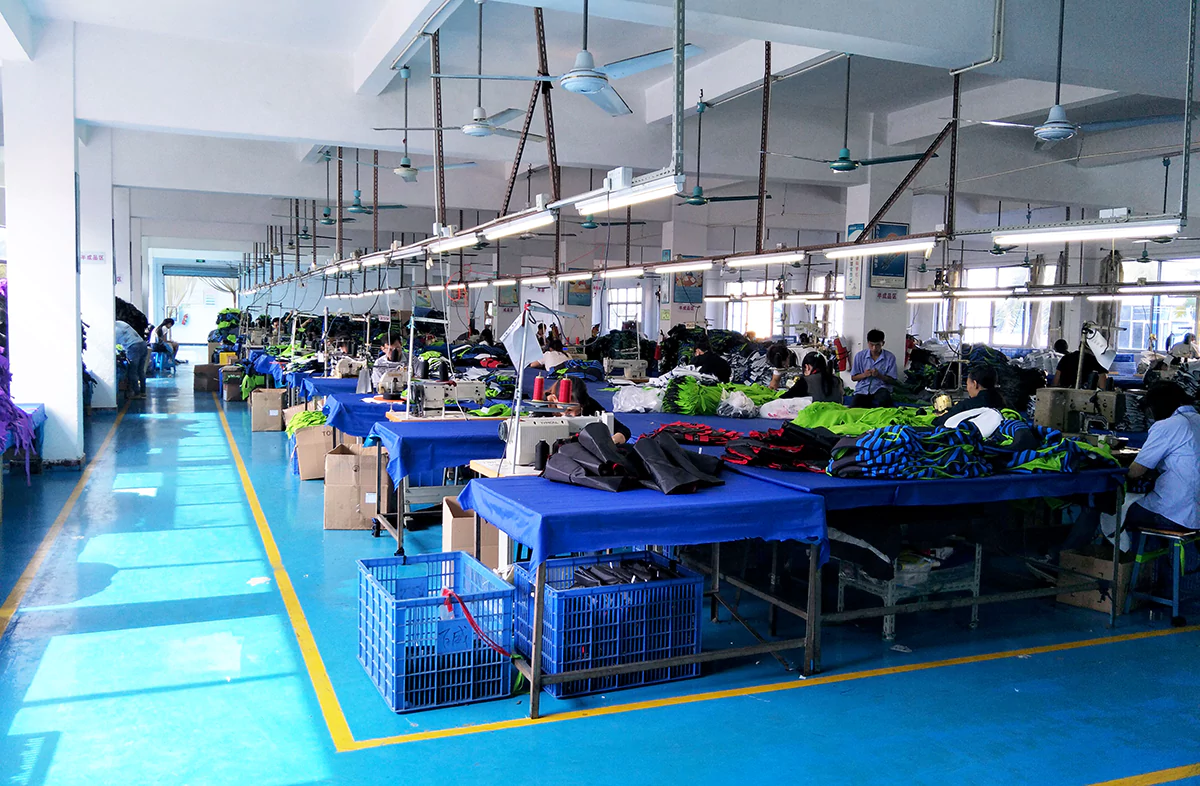
We don’t manufacture fabric — we manufacture BAGS. Our competitive advantage in fabric is our sourcing network: 200+ verified textile suppliers across Guangdong, Zhejiang, Jiangsu, and Fujian provinces, covering every fabric family from technical nylon mills to organic cotton weavers.
This means we can source materials that single-supplier factories can’t: specialty deniers, custom Pantone dyes, recycled-content fabrics, organic-certified cotton, and niche materials like Tyvek and neoprene. Every supplier in our network is vetted for quality consistency, delivery reliability, and compliance documentation.
If you have your own fabric supplier, we accept client-supplied materials. We inspect them on arrival using the same incoming QC protocol and flag any issues before cutting begins.
Years in Manufacturing
Factory Floor Area
Professional Staff
Production Lines
Monthly Capacity
Pre-Shipment Inspection
Three of the most common fabric sourcing scenarios we handle — showing the request, our process, and the delivered outcome.
Pantone Color Matching
Most Requested
Request: “We need our exact brand Pantone on 600D nylon — 4 colorways for a 6-SKU commuter backpack collection.”
Request: “We need our exactProcess: Lab dips produced on actual 600D nylon within 3 days. Color verified under D65 lighting. Client approved 4 dips. All 4 colors dyed in a single batch from one mill to guarantee batch-to-batch ΔE ≤ 1.5. Rolls delivered to factory, inspected against approved dips on arrival.brand Pantone on 600D nylon — 4 colorways for a 6-SKU commuter backpack collection.”
Delivered: 6 SKUs across 4 Pantone-matched colors with zero visible color variation when photographed together — critical for cohesive e-commerce listings and retail shelf displays.
Eco Material + Documentation
Growing Fast
Request: “Our ESG policy requires recycled-content materials with documentation for annual sustainability reporting. We need 5,000 backpacks in rPET polyester with verifiable recycled-bottle count.”
Process: Sourced GRS-certifiable rPET 600D from a verified mill. Supplier GRS certificate and composition test report filed. Calculated recycled-bottle count per bag (15 bottles). Sewn-in label: “This backpack is made from 15 recycled plastic bottles.” Kraft packaging to align the full chain.
Delivered: 5,000 eco-verified backpacks with full documentation for the client’s procurement team and ESG annual report. See our eco-friendly application page for the full sustainability material ladder.
Client-Supplied Fabric
Accepted
Request: “We have our own signature canvas from an Italian mill. Can you produce our tote bags using our material instead of sourcing your own?”
Process: Client shipped 12 rolls to our Guangzhou factory. We performed standard incoming QC (weight, color consistency, surface defect scan across all 12 rolls). Flagged 1 roll with inconsistent weave density — notified client with photos and measurements. 11 approved rolls stored in dedicated client zone, labeled and tracked separately through cutting and sewing.
Delivered: 3,000 tote bags in the client’s own signature canvas — with the defective roll excluded before any cutting began. No material substitution. The client’s Italian canvas supplier was impressed with the QC feedback and adjusted their own process.
Sample Lead Time
5–7 Days
Mass Production
25–35 Days
Payment Terms
30% T/T · 70% Before Shipment
Shipping Terms
FOB · CIF · DDP · Amazon FBA
Three real-world examples showing how fabric decisions shaped the final product — and the commercial outcome.
The client started with a standard 420D nylon weekender duffle — functional, water-resistant, but indistinguishable from dozens of Amazon competitors. They wanted to move upmarket without redesigning the bag.
Fabric solution: We switched the shell to 16 oz waxed canvas with PU leather trim. Same bag silhouette, same factory, same production process — but the waxed canvas created a completely different perception: heritage, premium, lifestyle. Added DWR finish for water resistance. Tan, olive, and charcoal colorways instead of black.
Result
Retail price jumped from $28 to $48 — a 71% increase — with only a $2.50/pc FOB cost increase. The waxed canvas version became the brand’s hero product and drove their premium repositioning.
The client’s procurement team required all corporate merchandise to use recycled materials per their published ESG policy. Standard polyester wouldn’t qualify. They needed documentation for their sustainability report.
Fabric solution: We sourced GRS-certifiable rPET polyester (600D, equivalent to standard polyester in strength and hand-feel). Each backpack uses approximately 15 recycled PET bottles. Supplier GRS certificate and composition test report provided for the client’s ESG filing. Sewn-in label: “This backpack is made from 15 recycled plastic bottles.”
Result
Procurement approved the material. The backpack’s “15 bottles” story became the most-shared fact in the company’s sustainability communications. The employee daily-use rate (89%) generated visible brand/sustainability messaging in the community. Annual reorder locked in.
The client launched a fashion bag collection requiring 6 seasonal colors across 4 bag types (handbag, crossbody, clutch, wallet). The challenge: exact Pantone matching on PU leather across 24 SKUs (6 colors × 4 types), with zero shade variation between bag types.
Fabric solution: We sourced all 6 PU leather colors from a single supplier mill in one dyeing batch — ensuring zero batch-to-batch variation. Lab dips approved under D65 before committing. All 4 bag types cut from the same dye lot. Hardware finishes (brushed gold) matched across all types from a single hardware supplier.
Result
All 24 SKUs had zero visible color variation when photographed together — critical for the brand’s cohesive e-commerce and retail display. The single-batch strategy added 5 days to sourcing but eliminated the most common quality complaint in fashion bag production: “the colors don’t match.”
Global Shipping Options
•Sea Freight
•Air Freight
•Express (DHL, FedEx, UPS)
•Rail Freight
•Door-to-Door
•Direct-to-Amazon FBA
Our standard sample kit includes 8 labeled fabric swatches — nylon, polyester, canvas, cotton, PU leather, non-woven PP, jute, and Tyvek — each marked with weight, denier/GSM, and recommended bag types. Feel the difference in hand before you commit to a specification. Free for qualified B2B inquiries.
Not sure what denier, DWR, or lab dip means? This quick reference covers the technical terms used throughout this page and in our fabric specifications.
Application
Primary Fabric
GSM
Grams per Square Meter. Measures fabric weight per area. Used for non-woven PP and some woven fabrics. Example: 80 GSM is lightweight; 120 GSM is standard non-woven.
PU Coating
Polyurethane coating applied to the back of the fabric. Creates a waterproof barrier. Heavier than DWR but blocks water completely. Used on technical outdoor bags.
Ripstop
A weave pattern with reinforced threads at intervals that stop tears from spreading. Common in lightweight nylon. Visible as a small grid pattern on the fabric surface.
Oxford
A crosshatch weave producing a textured, durable fabric. Oxford fabric is made from nylon or polyester. Common weights: 210D, 420D, 600D, 1680D.
Lab Dip
A small dye sample produced on actual fabric before committing to the full roll order. Used for Pantone color matching. You approve the lab dip under D65 lighting; then the full roll is dyed to match.
D65
Standard daylight illuminant used for color evaluation. Eliminates the color-shifting effect of different light sources (warm vs cool, indoor vs outdoor). Industry standard for Pantone color verification.
ΔE (Delta E)
A numerical measure of color difference. ΔE ≤ 1.0 = imperceptible to most people. ΔE ≤ 1.5 = standard tolerance for Pantone-matched bag fabrics. ΔE > 2.0 = visible difference, usually rejected.
rPET
Recycled Polyethylene Terephthalate. Polyester fabric made from recycled plastic bottles. Functionally identical to virgin polyester. GRS-certifiable.
GRS
Global Recycled Standard. Third-party certification verifying recycled content in textiles. Required by some brands and retailers for eco-friendly product claims.
GOTS
Global Organic Textile Standard. Certification for organic fibers (primarily cotton). Covers organic cultivation, processing, and labeling. Required for “organic cotton” claims in many markets.
Tell us: (1) the material family (nylon, polyester, canvas, etc.), (2) the weight or denier you want, (3) your target color (Pantone reference preferred), (4) any special finishes (water-repellent, anti-pilling, etc.), and (5) your sustainability requirements (recycled, organic, natural). If you’re unsure about any dimension, tell us the bag type and application — we’ll recommend the right combination.
Yes. We provide lab dips (dye samples on actual fabric) for Pantone approval before committing to the full roll. Standard matching takes 3–5 days for the swatch. Color is verified under D65 lighting. For multi-batch orders, we check ΔE ≤ 1.5 to prevent shade variation. Batch-to-batch consistency is checked during incoming QC on every production run.
All three measure fabric weight/thickness, but for different material types. Denier (D) measures fiber thickness — used for nylon and polyester (e.g., 210D, 600D, 1000D). Ounce (oz) measures fabric weight per square yard — used for canvas and cotton (e.g., 8 oz, 12 oz, 16 oz). GSM measures grams per square meter — used for non-woven fabrics (e.g., 80 GSM, 120 GSM). Higher numbers = heavier/thicker in all three systems.
Yes. We accept client-supplied materials. Ship your fabric rolls to our Guangzhou factory. We perform the same incoming QC (weight, color, defect scan, hand-feel, width) as on our sourced fabrics and flag any issues before cutting. Your fabric is stored separately and tracked through production. No substitution, no mixing with house fabric.
100% incoming material QC on every roll: weight/GSM verified against spec (±5% tolerance), color checked against approved Pantone swatch under D65 (ΔE ≤ 1.5), surface scanned on 4-point inspection machine for defects, hand-feel and drape compared to approved swatch, width measured at multiple points, and finish/coating tested (water-drop for DWR, peel test for coatings). Rejected rolls returned to supplier before cutting.
DWR (Durable Water Repellent) for water resistance. PU coating for waterproofing. Wax coating for heritage canvas. Anti-pilling for fleece. UV protection for outdoor bags. Anti-microbial for food-contact linings. Flame retardant where required by regulation. Finishes are applied at the textile supplier before fabric arrives at our factory.
Standard fabrics (stock colors in common weights): 0 days added — we source from existing mill inventory. Custom Pantone-dyed fabrics: 7–14 days added for dyeing and swatch approval. Specialty materials (Tyvek, recycled, organic): 5–10 days for supplier verification and procurement. Client-supplied fabric: depends on your shipping time to our Guangzhou factory.
Yes — that’s the most common request. “Should I use nylon or polyester for my gym bag?” “Canvas or cotton for my tote?” We compare the trade-offs (cost, durability, water resistance, printability, eco credentials, hand-feel) for your specific bag type and price point. We often produce sample swatches in 2–3 options so you can feel the difference before committing.
Yes. Lining is part of the fabric customization scope: smooth polyester lining (190T–210T), wipeable PEVA or PU-coated lining for food-contact bags, insulation lining for thermal bags, cotton or cotton-poly blend for premium handbags, and printed/branded lining with your logo or pattern on the interior. The lining is approved at the swatch stage alongside the shell fabric.
For a standard commuter or sports backpack: 420D–600D nylon balances weight, durability, and cost. For heavy-duty or travel backpacks: 840D–1000D provides maximum tear and abrasion resistance but adds weight and cost. For ultra-light or packable backpacks: 210D ripstop nylon minimizes weight while the ripstop weave prevents small tears from spreading. We test fabric performance at the prototype stage with a real-weight load test.
No fabric is inherently waterproof — waterproofing is a FINISH applied to the fabric. For water-resistant bags: DWR-coated nylon or polyester repels rain and splashes. For fully waterproof bags: PU-coated nylon with sealed seams blocks water under pressure. For waterproof compartments (shoe zones, wet pockets): PEVA or PVC-lined interior sections. Tyvek and neoprene are also naturally water-resistant without additional coating.
Depends on the material and expected load: Non-woven PP: 80–100 GSM for standard grocery loads (5–10 kg); 100–120 GSM for heavy loads (10–15 kg). Cotton: 5–8 oz for standard totes; 8–10 oz for heavy-duty. Canvas: 8–12 oz for daily shopping; 12–16 oz for bulk/warehouse shopping. Polyester: 210D for foldable bags; 600D for structured reusable bags. Heavier is not always better — over-specifying weight increases cost without proportional benefit for the bag’s actual use.
Yes. Send us a physical swatch or sample of the fabric you want to match. We identify the material type, weight, weave, and color, then source the closest match from our supplier network. For exact replication, we commission a lab dip and fabric sample for your approval. This is common for brands extending a bag line to match existing apparel, shoes, or accessories.
Tell us the bag type, your target material, and any specific requirements — Pantone color, weight, finish, eco credentials, lining preferences, or client-supplied fabric. We’ll source swatches within 3–5 days and walk you through the options before cutting a single prototype.